
Diving the Red Sea: history beneath the water

There are places where the ocean breathes history. The Red Sea is one of them.
We're not talking about a conventional coral reef or pelagic diving. The Northern Red Sea is a different dimension of diving entirely: the dimension of ships that time forgot and the ocean adopted. Wrecks resting on the bottom of one of the saltiest seas on the planet, covered today in soft coral, inhabited by thousands of species, preserved by warm, crystal-clear waters like nowhere else in the world.
The SS Thistlegorm was bombed in 1941 while transporting war supplies. It has spent decades on the seabed and every dive on it is a journey through time.
The RMS Carnatic has been submerged since 1869. The Dunraven since 1876. These are not sunken ships — they are artificial reefs with history. And diving them at night, when the nocturnal life transforms them into something else entirely, is one of the most cinematic experiences diving can offer.
To this add the pristine reefs of Tiran and Ras Mohammed — coral walls dropping vertically, current-laden water full of life, and one of the best-preserved marine ecosystems in the Eastern Mediterranean.
The Red Sea has spent decades on the world's best diving destinations list. There's a reason for that.
Why the Red Sea is different from everything else
The Red Sea is geologically a young sea — it formed just 30 million years ago when the Arabian and African plates began to separate — and that youth has consequences underwater.
No rivers flowing into it. No continental runoff to cloud the water. No sediments reducing visibility. The result is a sea with visibility that can exceed 30 to 40 metres under normal conditions, salinity higher than any other ocean, and water temperature that sits around 22-26°C for most of the year.
For coral, these conditions are ideal. For wrecks, they're perfect for preservation: the salty Red Sea water preserves metal structures in a way other seas cannot. Ships sunk 150 years ago maintain recognisable forms, intact structures and their original objects — cargo, motorcycles, ammunition, boots — still in place, covered in life but undisturbed.
The Northern Red Sea — the zone between the Gulf of Suez, the Strait of Tiran and Ras Mohammed National Park — concentrates the most iconic wrecks in the world and some of the healthiest reefs in the region. It's the perfect destination for anyone who wants two worlds in one week: the wreck and the reef.
The liveaboard: the only way to dive the Red Sea properly
This is not a resort destination. Or rather — it can be dived from shore in Hurghada or Sharm el-Sheikh, but doing so means missing half of what the destination offers.
The best dive sites in the Northern Red Sea are hours of sailing from the coast. The Thistlegorm is more than 4 hours from Sharm. The remote reefs south of Tiran are impossible from shore on a day trip. The liveaboard is the correct way to dive the Red Sea — and the difference isn't only logistical.
On a liveaboard the pace is completely different. You sail at night, arrive at the site at dawn, make 4 to 5 dives at the same spot before moving to the next. You have time to genuinely explore a wreck — not just pass through it. You can do the same dive at 7am with overhead light and repeat it at 10pm to discover it's an entirely different place.
The liveaboard also defines the group dynamic. Sharing a week on a boat with other divers, the conversations on deck at sunset, the image reviews from the day's dives, the night briefings before the nocturnal — that's something a hotel simply cannot replicate.
The most iconic wrecks of the Northern Red Sea
SS Thistlegorm — the most famous wreck in the world
The SS Thistlegorm is, without argument, the most famous wreck on the planet. A 4,898-tonne British merchant vessel sunk on 26 October 1941 by German Heinkel He 111 bombers while waiting in the Gulf of Suez to transport war supplies to the North African front.
What makes the Thistlegorm unique is not only its size or state of preservation — it's its cargo. When it was sunk, it was carrying:
BSA and Norton motorcycles exactly where the sailors left them in 1941
Bedford military trucks
Steam locomotives and railway wagons
Lee-Enfield rifles still in their original crates
Military boots, uniforms, field equipment
Fuel drums, ammunition and spare parts
Descending onto the Thistlegorm is entering a frozen moment in time. Coral has grown over the motorcycles, moray eels live between the guns, and Napoleon wrasse patrol the decks as if they were the new owners.
Depth: 15-30 metres
Level: Open Water with experience (the hold reaches 30m, but the decks are accessible from 15m)
The night dive: transformative. With a torch, the interior takes on a completely different dimension — details that daylight obscures are revealed in the torchlight.
RMS Carnatic — 150 years underwater
The RMS Carnatic sank in 1869 — it has spent more than 150 years on the Red Sea floor. It was a paddle steamer belonging to the Peninsular and Oriental Steam Navigation Company, which foundered after striking the Abu Nuhas reef during the night.
Unlike the Thistlegorm, the Carnatic has 150 years of coral on top of it. Its structures are literally buried under the reef — it's hard to tell where the ship ends and the coral begins. The bow is imposing, covered in orange soft coral and sea fans. The mast angles diagonally toward the seabed. And inside, between the cabins, an absolute silence that contrasts with the life teeming outside.
Depth: 6-27 metres
Level: Open Water
Dunraven — the mystery ship
The Dunraven is the most mysterious of the three great wrecks. Sunk in 1876 after striking the Sha'ab Mahmoud reef, it has spent nearly 150 years on the bottom and lies capsized on its port side, which creates a unique diving perspective — you dive above the keel, which becomes the ceiling of the dive.
The Dunraven's propeller is one of the most iconic images in Red Sea diving. Four metres in diameter, covered in soft coral, rising from the depths toward the light of the surface. It's the image that diving magazines around the world have been publishing for decades.
Depth: 8-28 metres
Level: Open Water with experience
Giannis D and Chrisoula K
The Giannis D (sunk in 1983) is one of the best-preserved wrecks in the Red Sea. Its cargo hold is intact, with pipes and winches perfectly recognisable. The stern is spectacular — propeller and rudder in excellent condition.
The Chrisoula K shares the Abu Nuhas reef with the Carnatic and Giannis D — three ships on the same reef, which divers call "the Abu Nuhas graveyard". Each has its own character, and together they represent a wreck diving destination unique in the world.
Umm Gamar — the coral garden
Umm Gamar (mother of the moon) is a breath of fresh air between wrecks. A volcanic pinnacle covered in some of the densest and most colourful coral in the Northern Red Sea. Hard coral gardens, orange soft coral on the walls, impressively large Napoleon wrasse and, when the current is running, grey reef sharks and barracuda in formation.
It's the site where the Red Sea reminds you that it isn't only a graveyard of ships — it's also one of the most alive reef ecosystems on the planet.
The reefs: Tiran, Ras Mohammed and Shark Reef
If the wrecks are the history of the Red Sea, the reefs of Tiran and Ras Mohammed are its living present.
Tiran is a strait between the Sinai Peninsula and Tiran Island where the currents of the Gulf of Aqaba and the Red Sea meet, creating an extraordinary concentration of marine life.
The four Tiran reefs — Jackson Reef, Woodhouse Reef, Thomas Reef and Gordon Reef — are coral walls dropping to great depths, with active currents, grey reef sharks, barracuda in formation and a density of fish that has to be seen to be believed.
Ras Mohammed has been a National Park since 1983 and is considered one of the best reefs in the world.
Shark Reef and Yolanda Reef form one of the most spectacular dives in the Red Sea: a coral wall where grey-tip and whitetip reef sharks are the protagonists, with the remains of the cargo ship Yolanda as a backdrop — including its famous bathtubs and sanitary fittings scattered across the reef.
Marine life of the Northern Red Sea
The Red Sea has 800 species of fish, many of them endemic to this sea alone. On Red Waters dives you can encounter:
Grey reef shark: the most common in Tiran and Ras Mohammed
Whitetip reef shark: on sandy floors and around wrecks
Napoleon wrasse (humphead wrasse): enormous, extraordinarily confident individuals — the symbol of the Red Sea
Giant barracuda: in schools of hundreds in Tiran's currents
Schools of jacks, snappers and parrotfish: literally covering the wreck decks
Green and hawksbill turtles: at reefs and wrecks
Scorpionfish and stonefish: on sandy floors between wrecks
Common bottlenose dolphins: frequent at certain points of the itinerary
Nudibranchs: exceptional macro life for detail photographers
Giant moray eels: between the wreck structures
Ocellaris clownfish in their anemones: abundant on coral reefs
Underwater photography on wrecks: the most complete scenario
The wrecks of the Northern Red Sea are the most complete underwater photography scenario that exists. No other type of dive offers so many possibilities in such a confined space:
Wide-angle: the enormous wreck structures demand extreme wide-angle. The bow of the Carnatic, the hold of the Giannis D, the motorcycle deck of the Thistlegorm with a diver in the foreground — images of a scale that no coral reef can replicate.
Shaft light: the hatches and portholes of the wrecks create rays of light penetrating the interior. At 8-9am with the sun low, those rays are one of the most sought-after compositions in diving photography.
Macro life: every centimetre of the wrecks is covered in life. Nudibranchs between the plate rivets, pipefish among the soft coral, scorpionfish perfectly camouflaged. The macro photographer has a guaranteed week of work.
Night dives: at night the wrecks are completely different. The daytime life rests, the nocturnal life emerges. Octopuses hunt, shrimps glow in the torchlight, the colourful fish that hid during the day are now front and centre.
In the Red Waters expedition, the wide-angle photography workshop with Borja García (@borjius_diver) is specifically designed for these scenarios: composition inside wrecks, light rays filtering through hatches, schools of fish on the decks. Plus daily onboard feedback sessions so every diver improves image by image throughout the week.
When to go to the Red Sea
The Red Sea can be dived year-round, but some windows are clearly better than others:
Season | Conditions |
March-May | Warm water, excellent visibility, peak season for the wrecks — optimal window |
June-August | Extreme surface heat, very warm water, less wind |
September-November | Second optimal window, warm water, less crowding |
December-February | Cooler at the surface, occasional north wind, but visibility remains excellent |
💡 Easter week — the dates of our Red Waters expedition (20-27 March 2027) — coincides with the start of the optimal spring window: warm water (22-24°C), maximum visibility of the year and calm surface conditions. One of the best weeks of the year to dive the Northern Red Sea.
Level required
Red Waters is designed for divers with experience, but it's not a technically demanding destination:
Minimum certification: Open Water
Minimum recommended dives: 20 logged dives
Currents in the Northern Red Sea: gentle compared to other destinations (Komodo, Azores, Bali) — one of the most accessible liveaboard destinations in the world for intermediate divers
Depths: most dives between 15 and 30 metres — no special technical requirement
Included nitrox allows you to extend your dives without worrying about decompression limits
If you've recently completed your Open Water and have few dives logged, write to us before booking. We'll assess together whether the level is a good fit — always better to be clear upfront than to arrive on the boat with doubts.
What makes wreck night diving special
Night diving a historic wreck is an experience that deserves its own mention.
In daylight, the Thistlegorm is spectacular. At night, it's something else. The silence becomes denser. Your torch creates shadows that daylight doesn't. Details that pass unnoticed in sunlight — the gear mechanism of a motorcycle, the numbering on an ammunition crate, the seal on a pharmacy bottle — appear in the torchlight with unexpected clarity.
And the fauna changes. Octopuses come out to hunt. Colourful shrimps glow in the corners. Moray eels patrol the decks. The fish that were perfectly camouflaged during the day are now the main characters.
A night dive on the Thistlegorm or the Carnatic is a dive where you carry the only light in a ship that has been sunk for 80 years. There aren't many diving experiences that can compare.
Experience the Red Sea with Born to the Ocean
From 20 to 27 March 2027 we're taking a small group to the Northern Red Sea on the Red Waters expedition. Eight days, seven nights aboard, with access to the most iconic wrecks in the world and the most spectacular reefs in Egypt.
The programme includes:
19+ dives on Northern Red Sea wrecks and reefs:
SS Thistlegorm, RMS Carnatic, Giannis D, Dunraven, Chrisoula K, Umm Gamar
Tiran reefs (Jackson Reef, Woodhouse, Thomas, Gordon)
Shark Reef and Yolanda Reef at Ras Mohammed
Night dives on wrecks
7 nights aboard on full board
Nitrox 28-32% included at no extra cost
12L cylinders and weights
Professional local dive guides
Water, coffee, tea and unlimited soft drinks aboard
Airport Hurghada — boat transfer return
Wide-angle underwater photography workshop with Borja García (@borjius_diver) — wreck composition, light rays, schools of fish
Daily onboard feedback sessions to evolve image by image
Professional photography sessions for every participant
Photography competition (wide-angle vs macro) with prizes for winners
Full accompaniment by Borja and Andrea throughout the expedition
Exclusive BTO Red Waters 2027 t-shirt
Not included: international flights, mandatory dive insurance, marine park fees and dive permits (200€ — paid on board), crew gratuities (~80€ recommended), Egypt entry visa (35€), equipment hire, alcoholic beverages.
From 1,150 €. Maximum group of 10 people.
We're divers and photographers designing expeditions we'd want to do ourselves. The Red Sea has spent decades on the world's essential diving destinations list — and Red Waters is designed to experience it properly, not in passing.
If you'd like more information about Red Waters or to reserve your place, let's talk on WhatsApp. We reply within 24 hours.

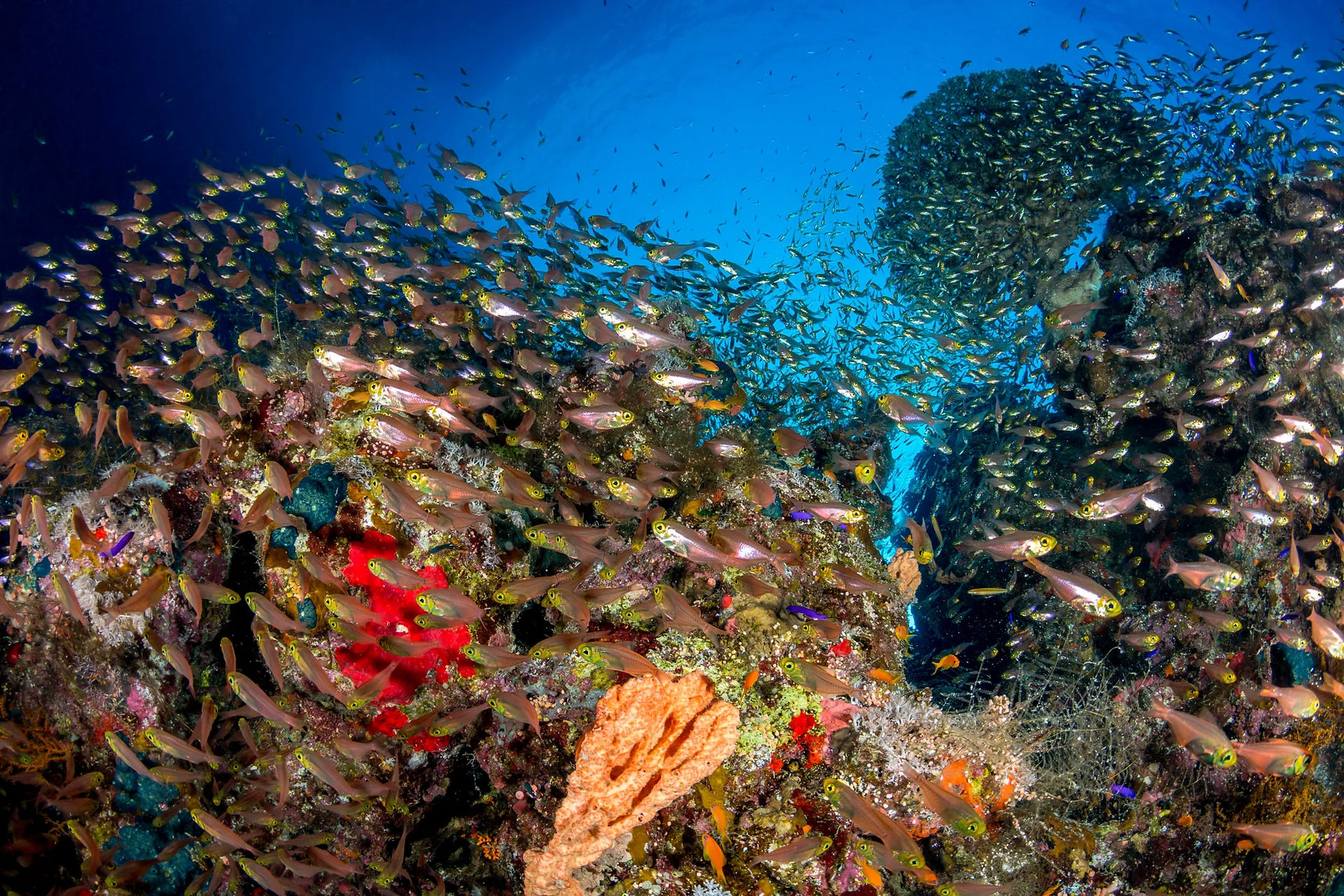
Arrecife del Mar Rojo Norte 
Motocicletas SS Thistlegorm 
Liveaboard Mar Rojo 
Arrecife de coral y buceador en el Mar Rojo 
Interior liveaboard Mar Rojo ruta Norte


Comments