
Diving in the Azores: the Atlantic in its wild state

There is a place in the middle of the Atlantic where the ocean knows no bounds.
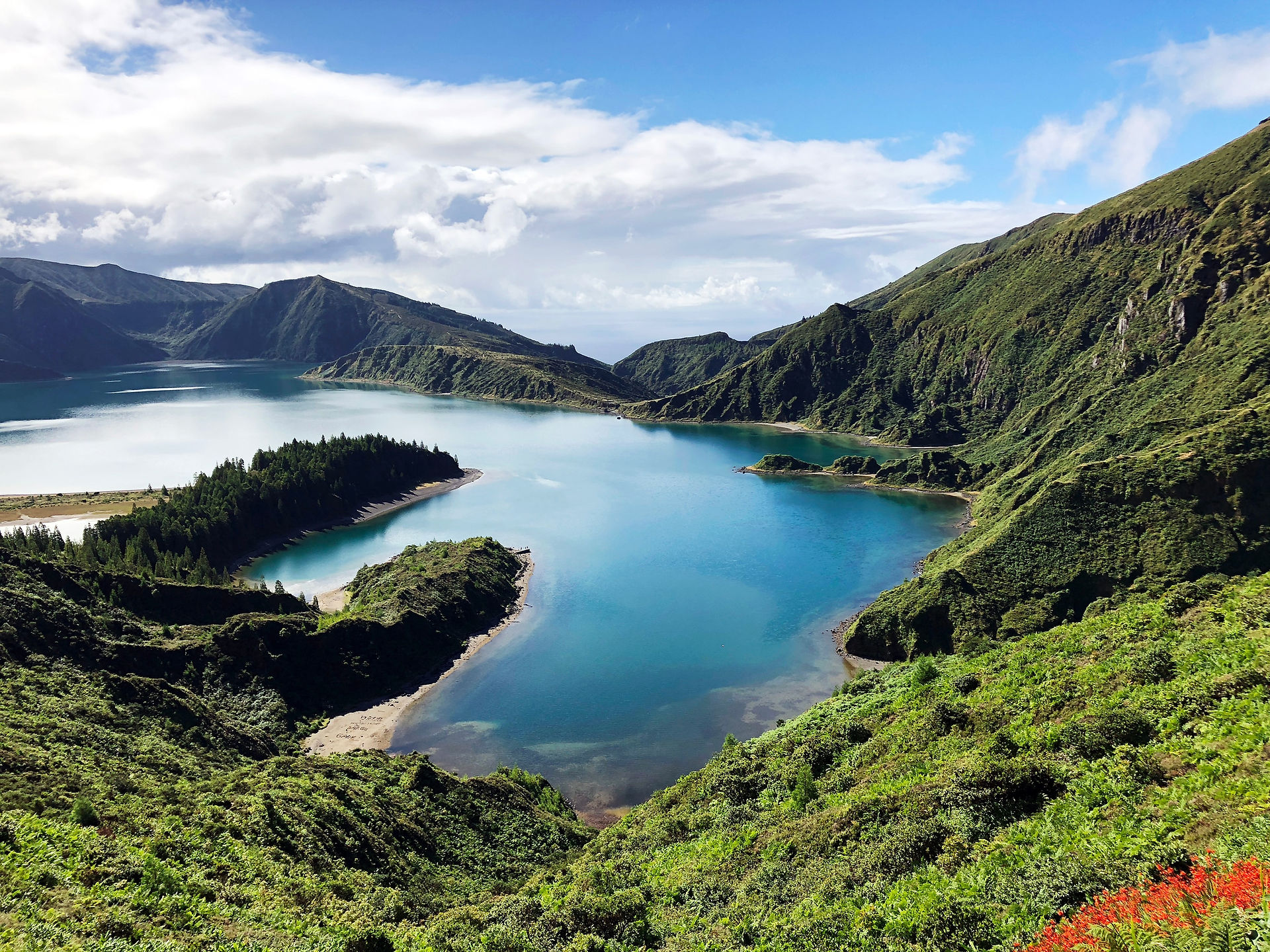
Nine volcanic islands lying 1,500 kilometers off the Portuguese coast—forged from the seabed by millions of years of volcanic activity and surrounded by one of the deepest, most vibrant oceans on the planet.
The Azores are not a destination defined by tropical coral reefs or picture-perfect Caribbean waters.
They are something else entirely. They offer true depth, life-rich Atlantic currents, and a concentration of pelagic wildlife unmatched anywhere else in Europe.
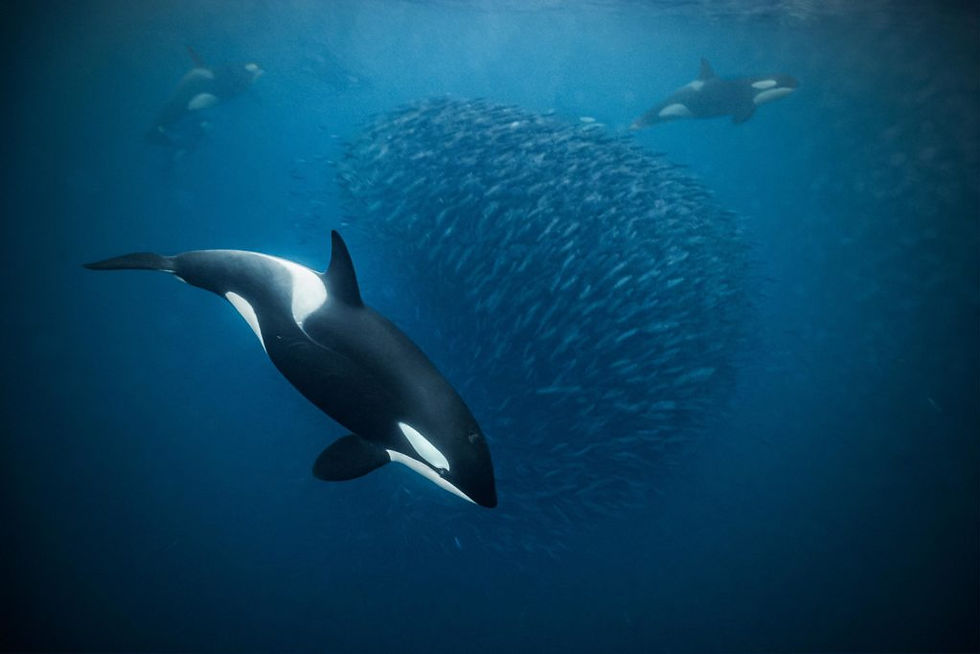
They are a place where sperm whales raise their families, where blue sharks and makos patrol the open sea, and where thousands of mobula rays soar above the waves.
And for those who truly understand diving, they are exactly the kind of destination that reminds you why you started diving in the first place.
This guide is designed to help you understand what makes the Azores special, what you can discover underwater, and what it is like to experience this destination from the inside.
Why the Azores Are Different
The answer lies in geography and geology.
The Azores sit atop the Mid-Atlantic Ridge—the massive volcanic mountain range dividing the Atlantic seabed from north to south—at the point where three tectonic plates converge.
This geological activity creates a unique underwater landscape: volcanic walls, lava tubes, and seamounts rising from depths of thousands of meters to just below the surface.
These seamounts are the key to it all. When an ocean current strikes a seamount rising from the depths, it forces cold, nutrient-rich water toward the surface.
This upwelling fuels an extraordinary food web: phytoplankton, zooplankton, small fish, large fish, and finally the great pelagic predators for which the Azores are famous.
The result is Europe’s premier cetacean hotspot, with over 25 recorded species of whales and dolphins.
The sperm whale—the planet's largest toothed predator—has resident populations here.
Pelagic sharks appear in densities rarely seen elsewhere in the Atlantic.
And mid-sized marine life, such as mobula rays and loggerhead turtles, are frequently encountered.
The Azores offer open-ocean diving, megafauna, and deep blue waters. If that is what you are looking for, you have found your European destination.
The Wildlife That Makes This Destination Special
Pelagic Sharks — Blue and Mako
Cordon's Bank is a name that divers in the Azores speak with reverence. This underwater bank, north of Faial Island, is an extraordinary gathering place for pelagic sharks. Here, two of the most sought-after encounters in European diving take place.
The blue shark (Prionace glauca) is the most common and the most intriguing. Indigo blue on its back, white on its belly, with large, dark eyes, its slow, fluid movements conceal a brutal speed when the situation demands it. They can exceed 3 meters in length. They are remarkably curious—they approach, circle divers, look at you, and then return. It is one of the few sharks in the world that actively seeks eye contact with humans in the water.
The mako shark (Isurus oxyrinchus) is another story altogether. It's the fastest shark in the world—capable of exceeding 70 km/h—with a streamlined, aerodynamic body, enormous, completely black eyes, and teeth that aren't hidden. The mako doesn't possess the placid curiosity of the blue: when it appears, it does so with presence and speed. An encounter with a mako at Cordon's Bank is one of the most intense experiences that pelagic diving can offer.
Both are dived in the same setting: you descend into the open sea, with no visible bottom, in the infinite blue of the North Atlantic. It's an experience that redefines the concept of "being truly in the ocean."
⚠️ Encounters are conducted with reputable operators and clear safety protocols. No bait is used, distances are respected, and proper behavior is observed. Incidents are extremely rare when everything is done correctly.
Mobula rays—those that fly over Princess Alice
Princess Alice Bank is the most spectacular seamount in the North Atlantic accessible to recreational divers.
It rises from the depths to 50-60 meters below the surface, and some of the most cinematic pelagic encounters in the ocean take place here.
Oceanic mobula rays (Mobula mobular) congregate here in groups that can be spectacular: dozens, sometimes hundreds of individuals moving in dense schools near the surface, leaping out of the water, gliding on the current.
Visibility at Princess Alice can exceed 40 meters—meaning you can see the mobula rays from below in the deep blue, in a scene straight out of a nature documentary.
The day at Princess Alice is spent on a private catamaran—a full day on the open sea dedicated exclusively to this site. It's not a quick stop between dives.
Sperm whales—the giant that chose the Azores
The sperm whale (Physeter macrocephalus) has one of its most important breeding and reproduction grounds in the North Atlantic in the Azores.
Families of females with calves are year-round residents in the waters of Faial. Encounters are with family groups—not with solitary individuals passing through.
Sperm whales are primarily encountered while snorkeling and freediving from the surface or by sighting. It's an international conservation rule: scuba noise disturbs the animals. But being in the water just two meters from a resting sperm whale, hearing its echolocation clicks resonating throughout your body, watching its 15-ton mass move with absurd smoothness—is an experience that transforms any diver's perspective.
Dolphins and Pilot Whales
The waters of the Faial-Pico Channel are home to resident populations of common and bottlenose dolphins, and frequent encounters with pilot whales (Globicephala macrorhynchus).
They are common on almost any dive or whale-watching trip—sometimes appearing spontaneously around the boat, other times requiring active searches.
The channel between Faial and Pico is one of the most active whale migration routes in the North Atlantic, and the area where land-based lookouts—the sentinels used by whalers in the 19th century—still guide ships to sightings.
Nudibranchs and Moray Eels—Shore Diving
Not everything in the Azores is pelagic. Shore dives on volcanic seabeds offer Atlantic marine life unlike anything seen in any other sea: endemic nudibranch species, giant moray eels, colorful starfish, and the strange sensation that the black volcanic seabed highlights colors unlike any other environment.
How to Dive in the Azores
Diving in the Azores offers two completely different experiences that you should be aware of before you go:
Shore Diving on Volcanic Seabeds:
Dives from the shore or from a boat around the island's volcanic structures. Endemic Atlantic fauna, nudibranchs, moray eels, turtles, and rays.
Visibility is usually excellent.
Water temperature in July: 22-24°C (72-75°F). Suitable for experienced Open Water divers.
Pelagic Diving and Snorkeling:
Boat trips to the open sea for encounters with sharks, mobula rays, and sperm whales.
Requires proficiency in open water without a visible bottom—this is perhaps the only technical aspect that might cause discomfort for divers accustomed to reef diving. The sensation of being suspended in the infinite blue of the Atlantic without seeing the bottom is unlike any other type of diving. It is recommended to have at least 20 dives before venturing into this type of environment.
Key Highlights of the Destination
Princess Alice Bank (from Faial by catamaran): an open-sea seamount, the epicenter of mobula ray encounters. Visibility up to 40 meters. The most cinematic day of the expedition.
Cordon's Bank (north of Faial): the mecca for blue sharks and mako sharks in the European North Atlantic. Deep blue, bottomless diving in one of the purest environments for pelagic diving.
Waters of Faial (Faial-Pico Channel): an area for spotting sperm whales, dolphins, and pilot whales.
Faial Coast (check and shore dives): two dives on volcanic bottoms to calibrate equipment, get to know the group, and explore coastal Atlantic marine life before the pelagic excursions.
When to go: the Azores calendar
April-June
Peak blue sharks, first mobula rays, good visibility
July-September
Optimal window: warm water, sperm whales with calves, abundant mobula rays, active blue and mako sharks, spotted dolphins
October-November
Last season for pelagic species, sightings of migrating whales
December-March
Low season, less pelagic activity, shore diving possible
💡 July is the month chosen for our Blue Horizon expedition for a specific reason: it combines the warmest waters of the year (22-24°C), the peak presence of blue and mako sharks, active mobula rays in Princess Alice, and sperm whales with entire families in the waters of Faial. The most complete window of the year.
Required Level
For shore dives: Open Water Diver with some experience. No special technical difficulty.
For pelagic diving with sharks: Minimum Open Water Diver certification with at least 20 dives, preferably with open water experience. The main requirement is not technical but psychological—being comfortable in deep blue water with no background reference.
For Princess Alice Bank: Any level is suitable—the day combines surface snorkeling and diving in the upper layers of the water.
If you have any doubts about whether your level is sufficient, please contact us before booking. This is one of the most common conversations before this trip, and it's best to have it well in advance. The goal is always for everyone to arrive feeling comfortable.
Underwater Photography in the Azores
The Azores are an exceptional destination for wide-angle and pelagic photography:
Blue shark in open blue water: clean compositions, without background distractions, with an animal that approaches and looks directly at the camera. One of the most powerful images of pelagic diving
Mako shark: fast, dynamic, it demands high shutter speeds and anticipation. The photos turn out powerful.
Mobula rays at Princess Alice: from below, in blue, with the Atlantic light filtering through—images worthy of National Geographic, available to anyone who comes prepared.
The expedition's photography workshop is specifically designed for these scenarios: composition in blue, distances with pelagic species, and the use of natural Atlantic light. It's not theoretical study—it's real-time feedback at the very spots where you'll be diving.
The Azores Beyond the Water
The Azores don't end at the water's surface. Faial Island is an active volcano with one of the wildest landscapes in Europe.
Capelinhos Volcano (last eruption: 1957-1958): a lunar landscape of black lava, ash, and volcanic desert on the western tip of Faial. It's like stepping onto another planet—and it's just a twenty-minute drive from the port.
The Caldeirão (Faial's central caldera): a volcanic crater 2 kilometers in diameter covered in endemic Atlantic vegetation.
The trek from Capileiros to the caldera's rim is one of the most beautiful routes in the Azores.
The Museu da Baleia (Whale Museum) in Porto Pim: Faial's whale museum tells the story of the Azores as one of the main whaling ports in the North Atlantic. A complex, honest, and fascinating story—and the best possible context for understanding the relationship between these islands and the ocean that surrounds them.
Diving in the Azores with Born to the Ocean
From July 16th to 23rd, 2027, we're taking a small group to Faial, Azores, on the Blue Horizon expedition. Eight days designed to experience the best this destination has to offer: Atlantic pelagic marine life, volcanoes, cetaceans, and underwater photography in one of Europe's most cinematic settings.
The program includes:
5 dives + whale watching:
2 shore check dives
Full day on a private catamaran to Princess Alice Bank (mobula rays, deep blue Atlantic, 40m visibility)
Dive with blue sharks and mako sharks at Cordon's Bank
Half day of sperm whale and pilot whale watching (and who knows what else—the ocean decides)
8 days / 7 nights accommodation with breakfast included in a double room with private bathroom.
12L tanks and weights included
Professional local dive guides
Meals on dive days
Round-trip airport transfer and accommodation
Wide-angle photography workshop with Borja García (@borjius_diver) — composition in blue, working with pelagic species, Atlantic light
Professional photography sessions for each participant during the trip
Photography contest: two categories (pelagic vs. coastal), judging panel, and prizes for the winners
Guided trek to Capelinhos and Caldeirão
Full support from BTO staff throughout the expedition (2 tour leaders)
Exclusive BTO Blue Horizon 2027 T-shirt
From €1,490 (flights not included — flights with a layover in Lisbon to Horta are available from several Spanish cities).
Maximum group size: 10 people.
If you like what you've read and want more information about Blue Horizon, let's chat on WhatsApp. We'll get back to you in less than 24 hours.




Comments